The reason we take on work in Tacoma is that the businesses here tend to be sharper about what they want than the brief lets on. AI document processing for a Tacoma team almost always ends up looking different to AI document processing for a downtown Auckland one.
AI document processing designed around the way a Tacoma team actually runs.
Our goal is to give Tacoma businesses a three-day weekend, so people can spend more time with their families and the people they love :)
What AI document processing actually does
Scanned invoices, signed contracts, handwritten timesheets, PDF specs - extracted into clean data and routed where they belong. No more typing what someone already wrote.
- 01 Vision models read scans, photos, and handwriting
- 02 Pushes structured data into Xero, your CRM, or sheets
- 03 Confidence flags route low-certainty docs to a human
- 04 Handles te reo, bilingual forms, and old NZ templates
Built on: Claude Vision AWS Textract Mistral OCR Vercel
Without Kiwi Dynamics
With Kiwi Dynamics
What you actually get
Every engagement is scoped and quoted up front. This is what is in the box.
- A working pilot, in productionNot a prototype on someone's laptop. The first slice of AI document processing runs against real work within weeks.
- Your data stays yoursIt runs on your accounts and your tools. If we part ways you keep the system and everything in it.
- The workflow mapped before codeWe write down what good looks like for Tacoma businesses first, so nobody is guessing at handover.
- Support after it landsThe people who built it stay reachable when the business changes shape around it.
How AI document processing compares
The two things most businesses do instead, and where each one runs out.
| Hiring for it | An off-the-shelf tool | Kiwi Dynamics | |
|---|---|---|---|
| Fit to how you work | Fits perfectly, costs a salary | You bend your process to suit the tool | Built around the workflow you already run |
| Time to something useful | Immediate, and permanent | Quick to switch on, slow to make fit | A working slice in weeks, then hardened |
| Who owns the data | You do | The vendor, on the vendor's terms | You do, in your own accounts |
| When it breaks | That person sorts it, if they are in | A support queue and a ticket number | The people who built it |
| What it costs | A salary, every year, forever | Per seat, forever, used or not | Scoped and quoted up front |
What Tacoma teams tell us when they get on a call.
- Tacoma runs on port logistics, manufacturing and military, a genuinely industrial counterpart to Seattle up the freeway - AI here means operational reliability over polish.
- One of the busiest container ports on the West Coast, a major military presence at Joint Base Lewis-McChord, and a manufacturing base that never left. Tacoma businesses want AI that works the same way every shift, not a flashy demo.
We work with teams across Tacoma: Downtown Tacoma · Point Ruston · Hilltop · Proctor District · Lakewood · Puyallup.
Talk to us about this →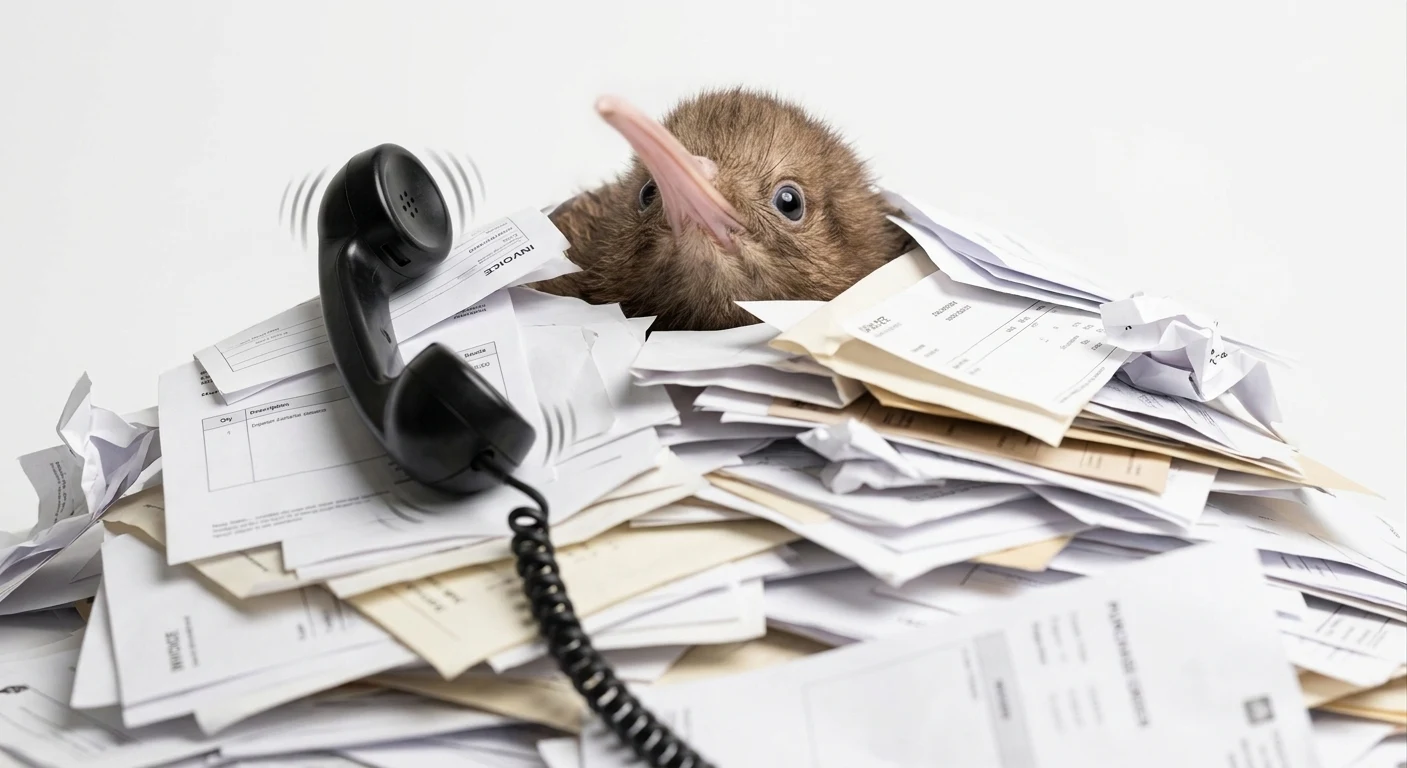
How we build AI document processing for a Tacoma team.
We scope narrow, ship a working pilot, then harden it into production. The first slice is the highest-leverage workflow for your Tacoma business, so value lands before the build is finished. AI for paperwork.
Talk to usHow the work runs
- Find the one workflowWe look for the job costing Tacoma businesses the most hours or the most leads, and deliberately ignore the rest for now.
- Ship a working sliceA narrow version goes into production in weeks, against real work, so the value shows up before the build is finished.
- Prove it, then widenWe measure it against what the work cost before. If it does not pay for itself, we say so rather than scaling it.
- Harden and hand overLogging, fallbacks and a real handover, so it keeps running when we are not in the room.
The outcome for Tacoma teams
The shape of the result for Tacoma teams: Cuts data-entry labour by 80% on invoices, POs, and timesheets. Built on Claude Vision, hardened with the rest of the stack as it scales.
Not your typical AI agency.

Honest about what AI can and cannot do

Ships the one workflow that pays for itself

Hours given back, never the size of the invoice
*Every engagement is scoped and quoted up front. Results vary by workflow and business.
FAQ
How quickly can we see something running?
Week three for a clickable internal demo against real data. Week six for a slice your team can actually use. We hold ourselves to those numbers because they're what stops a project drifting into "endless discovery".
What's the smallest engagement you'd take on?
A two-week paid discovery for Tacoma businesses that aren't sure whether the build is worth doing at all. You get a one-page write-up of what we'd build, what we'd skip, and what it would cost. About 30% of those discoveries end with us recommending you don't proceed.
Do you have proof this works for Tacoma businesses?
Direct case study: Cuts data-entry labour by 80% on invoices, POs, and timesheets. Happy to walk you through full numbers on a call.
What tools do you build AI document processing on?
For AI document processing we usually reach for Claude Vision, AWS Textract, Mistral OCR, Vercel. We're tool-agnostic at heart - we pick what your Tacoma team can actually run after we hand the build over, not what looks good on a vendor sticker.
One reply, one direction.
We don't run sequences or follow-up automation. One useful answer, one decision on your side.
Talk to us about this
Tell us what you're trying to do and we'll reply with how we'd build it - no obligation.